How to Find the Right HR Mentor
Targeted partnerships can turbocharge your career. After all, no one understands HR like HR.
Introduction
When Megan Lynn, SHRM-CP, was six months into her HR career, she had a rough time managing a difficult relationship with a supervisor. “Employees go to HR to resolve issues, but who do HR professionals go to when they have a problem?” asks Lynn, an HR generalist at BNBuilders, a design and construction company in Seattle. Then she found the answer: other HR practitioners.
In 2014, Lynn was matched with mentor Karren Eckwortzel through the mentorship program of the Lake Washington HR Association (LWHRA), a mega chapter of the Society for Human Resource Management (SHRM) in the Puget Sound area. Eckwortzel is HR director at Integrus Architecture in Seattle and has more than 15 years of HR experience; she is also the 2018 LWHRA SHRM chapter president.
“One of the biggest benefits was to have a safe, confidential environment to discuss my thoughts, feelings, questions and professional aspirations,” Lynn says. “Karren … built my confidence, taught me how to handle crucial confrontations and gave me a voice. Karren was one of the first people I contacted when I passed my SHRM-CP exam.”
Like many HR professionals, Lynn found mentoring to be a powerful tool for building her network and keeping pace with a rapidly evolving profession. It can be particularly valuable for solo practitioners who may feel alone in their organizations—or anyone who wants to grow by cultivating good old-fashioned relationships. “In our world, where everyone is connected and has 20 billion text messages, no one is talking,” says Evan Guzman, head of marketing and strategic partnerships at Washington, D.C.-based Veterati, an online platform that pairs military mentees with civilian mentors. “People feel isolated,” he says.
Twenty-nine percent of organizations have formal mentoring programs in place, according to a November 2017 research study by the Association for Talent Development (ATD), and 37 percent have informal ones. Many more opportunities are available through professional organizations such as SHRM or Web-based services like Veterati.
Modern Mentoring
While the number of companies offering mentoring programs has held steady since the mid-2000s, according to ATD, the nature of mentoring itself has shifted to better align with today’s dynamic workplace. Decades ago, formal mentoring relationships routinely extended at least a year and informal ones might span a decade. Now, mentoring arrangements are shorter and more task- and specialty-oriented. With modern partnerships typically lasting anywhere from 10 months at the long end to a few days or hours on the short, the lines between mentoring and coaching have blurred.
“Mentoring used to be more of a ‘lead people by the hand’ approach. Now, it’s a lot more like coaching with a questioning, Socratic method,” says Charles Williams, SHRM-CP, senior business process consultant at publicly owned electric utility Austin Energy in Austin, Texas.
Moreover, there’s growing recognition that mentors need not be levels above the people they’re mentoring on the organizational chart to be effective. Many senior leaders are realizing they have much to learn in the realm of digital technology and social media, for example. In so-called reverse mentoring programs, junior staffers teach executives, typically in monthly meetings for six months to a year.
Williams participates in the Austin HR Management Association (AHRMA) Just-in-Time Mentoring Program. In 2014, Darlene Templeton, co-VP of career development for AHRMA, took over the program for the SHRM mega chapter and implemented a short time-horizon for mentoring relationships. “It used to be mentees would connect with a mentor for a year, but the mentee may not need a year of mentoring on that specific subject,” she says.
Now, mentors and mentees are matched up twice a year for four to five months. Currently, the program has 30 pairs. “I liked … the ‘just-in-time’ approach because it is more informal and flexible,” says Susan Smith, SHRM-SCP, a program participant and director of HR at the nonprofit health facility People’s Community Clinic in Austin, Texas.
Despite the pervasiveness of texting and e-mail in today’s workplace, experts still recommend that mentor/mentee pairs meet in person or talk via phone. “E-mail is great for transferring data, but it’s not a conversation,” Williams says. “For a mentoring relationship to work, it has to be a conversation.”
Even online platforms like Veterati are focused on real-time discussions. The technology comes into play only to facilitate mentor/mentee matchmaking. “When you register on
Veterati, you go into a mentorship database,” says Natalie Oliverio, a Navy veteran who has mentored 75 people across the country and works with another 23 on an ongoing basis. “I get a text message saying a mentee has requested me, and I can confirm or decline the booking.” Her day job is as senior corporate recruiter for Bombardier, an international plane and train manufacturer headquartered in Montreal with 69,500 employees, including 7,000 in the United States.
“I mentor both HR and non-HR professionals,” Oliverio says. “With candidates who want to get into HR, I help them understand the civilian world … [since] HR in the military is narrower in scope.”
Like AHRMA’s program, Veterati is focused on mentoring relationships that address specific professional needs over a short time frame. “It’s on-demand mentorship,” Guzman explains. “I have a mentee interviewing on Monday who I’m talking with today [Friday] about tips for phone interviews.”
From #MeToo to #MentorHer: Mentoring in the Post-Weinstein Era
Many men have become hesitant to enter into mentoring relationships with women in the wake of recent high-profile sexual harassment allegations such as the ones involving former Hollywood mogul Harvey Weinstein. According to 2018 LeanIn.org and Survey-Monkey data from more than 8,000 working adults:
• The proportion of male managers who don’t feel comfortable mentoring women has more than tripled since the scandals broke, to 16 percent from 5 percent.
• Almost 30 percent of male managers are uncomfortable working alone with a woman—more than twice as many as before.
• Senior-level men are 3.5 times more likely to hesitate to have a work dinner with a junior-level woman than a junior-level man.
That backlash can hurt women’s careers. Rather than avoiding the other gender, experts advise, men can keep mentoring productive and professional by considering these suggestions:
|
| Trade chivalry for common courtesy. Carrying a woman’s luggage on a business trip or paying for her coffee could undermine a woman’s confidence and make
her feel indebted, says David Tessmann-Keys, president of global leadership company Development Dimensions International Inc. in Pittsburgh. Instead, exhibit common courtesy that you would show any person.
|
| Let mentees control decisions. Ask mentees to choose a public place to meet and arrange other logistics. Ask open-ended questions and listen carefully to gain important insights. |
| Act wisely and focus on the work. Don’t make jokes of a sexual or flirtatious nature. “When mentoring, whether praising or giving constructive feedback to the opposite sex, be sure to focus on skills, talents and competencies,” says Stacey Browning, president at Paycor, a Cincinnati-based human capital management company. |
Getting It Right
Mentoring is a unique relationship, different from manager, parent or friend,” says Jim Kochanski, SHRM-SCP, managing director of The Corte Group, an Austin, Texas-based organizational consultancy. Experts say a few actions facilitate a productive pairing:
Dedicate the time. Both parties need to commit. “One common mistake [among mentors and mentees] is not connecting as quickly or as often as they should. We recommend pairs meet at least once a month,” Templeton says.
Be available in between as well. “Respond in a timely manner to all communications from your mentee or mentor. If one person doesn’t make the relationship a priority, it won’t work,” Kochanski says.
Establish your objectives. “Mentees should come into the relationship with clear goals and understand the areas where they’d like a mentor’s feedback,” recommends Natalie Morgan, HR and communications manager for CareerPlug, an applicant tracking software company in Austin, Texas.
Moreover, those goals should be realistic and achievable. “As a mentee, don’t expect your mentor to be a search firm for your next job,” Kochanski says. “Mentors can help you be more successful in your current job and plan for the future, but you have to make your own way.”
Give sound advice, selectively. “Don’t use this as a chance to tell old war stories,” Kochanski advises mentors. “Ask lots of questions and help the mentee to develop options, but [let them] make their own decisions.”
And don’t toss out glib advice. “You can’t give off-the-cuff opinions. You need to give substantiated proof—examples and experiences—as to why the advice you’re giving works,” Oliverio says.
[SHRM Members'-Only Toolkit: Managing the Employee Onboarding and Assimilation Process]
Meet the Mentors and Mentees
HR Magazine asked four mentoring pairs from the Just-in-Time Mentoring Program at the Austin HR Management Association chapter of SHRM, a mega chapter with 600 members, to share their advice and insights.
|
The Mentee
Regina Waldo (left)
Office manager and solo HR practitioner at
Austin Eastciders, a hard cider craft brewing company
Charles Williams, SHRM-CP (right)
Senior business process consultant at
Austin Energy, an electric utility
| 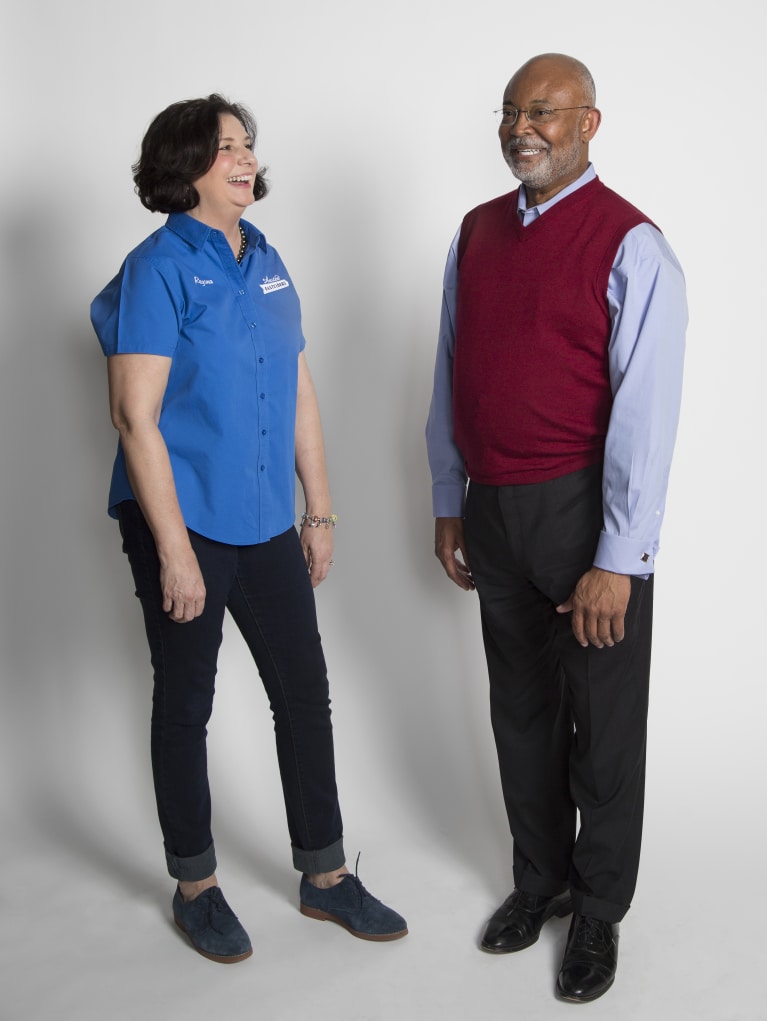 |
Williams: I didn’t know anything about startups, so it was fascinating to visit Regina’s office. Seeing another type of organization helped me to keep things fresh. I’ve been in HR for over 30 years, so it’s easy to get settled. Mentoring is a way of challenging yourself not to do that.
Waldo: My CEO and executive team say my speaking skills improved greatly. Charles also assisted me with a difficult termination. I had to sit in as an employee I knew well was let go. We’re a small office, so we had worked together quite a bit. Charles helped me understand it was OK to separate the business from the person.
|
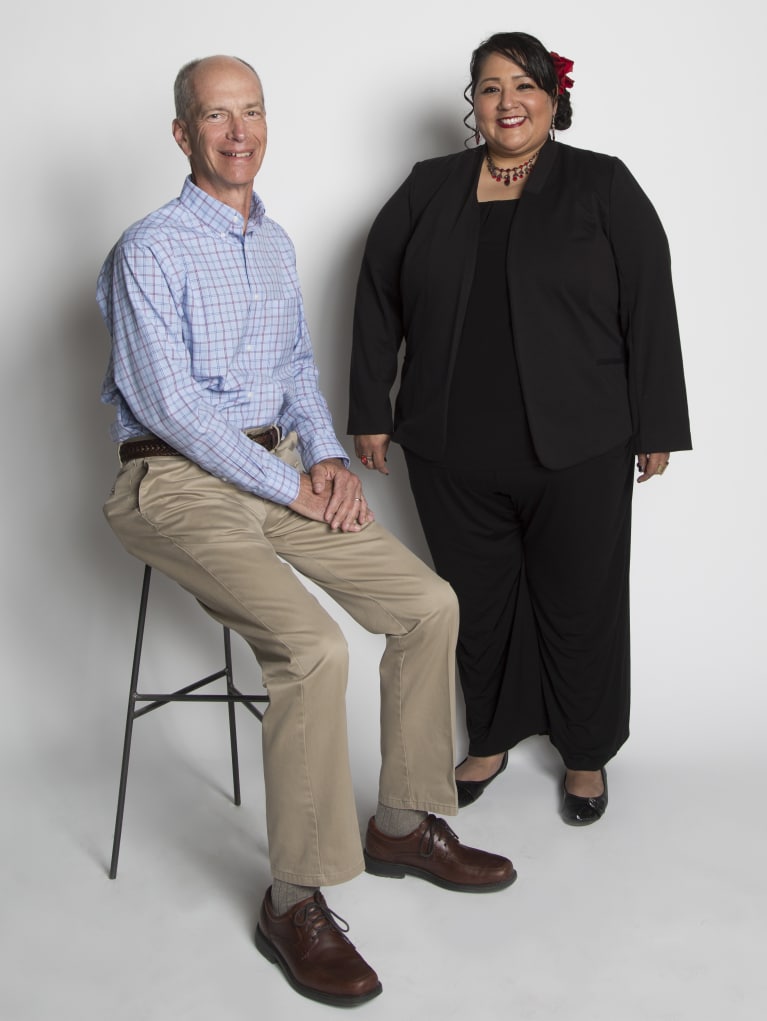
The Mentee
Marisol Contreras (right)
Vice president of HR at the
National Domestic Violence Hotline, a nonprofit
The Mentor
Jim Kochanski, SHRM-SCP (left)
Managing director at
The Corte Group, an organizational consultancy
|  |
|
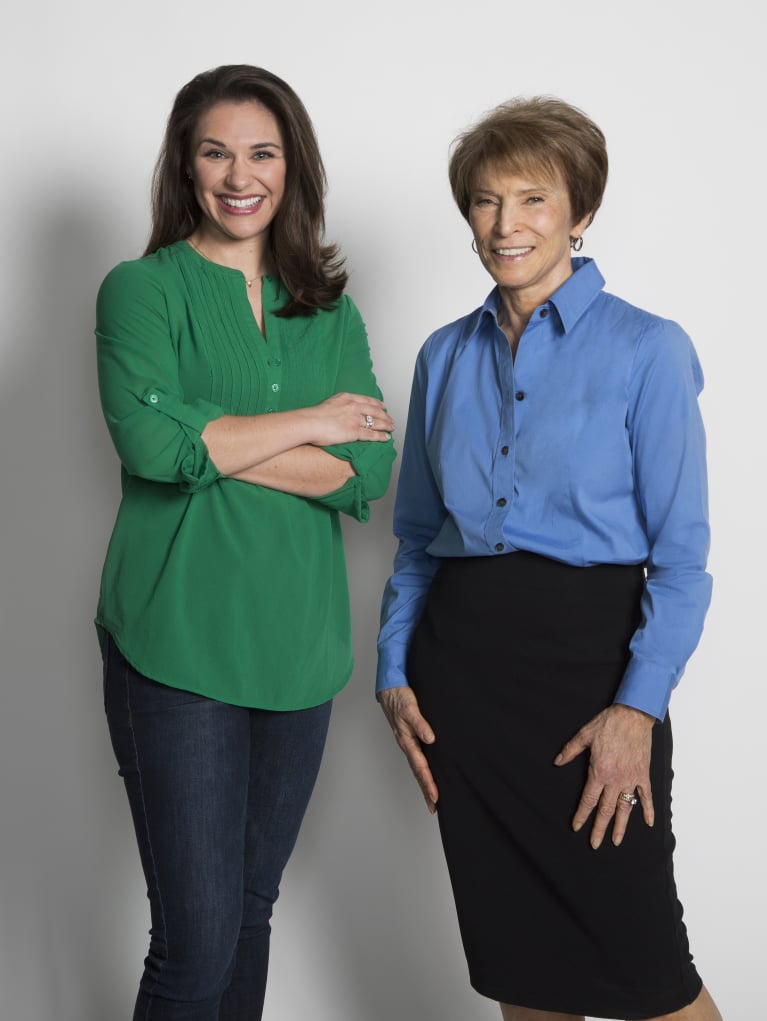
The Mentee
Megan Gann, SHRM-CP (left)
HR manager and solo HR
practitioner at
Camp Gladiator, a fitness startup
The Mentor
Susan Smith, SHRM-SCP (right)
Director of HR at the
People’s Community Clinic, a nonprofit health facility
|  |
|
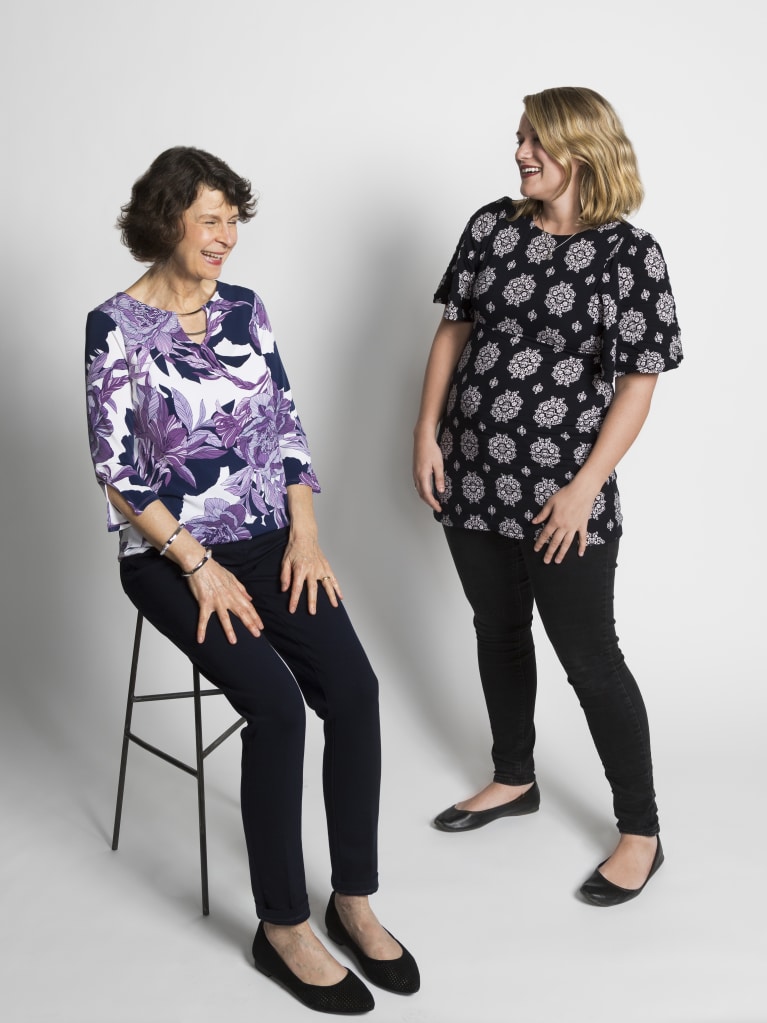
The Mentee
Natalie Morgan (right)
HR and communications
manager and solo HR
practitioner at
CareerPlug, an applicant tracking software company
The Mentor
Diane Bohman, SHRM-CP (left)
Vice president of human resources at the
American Association of Nurse Practitioners, a national professional membership organization
|  |
Photographs by Jessica Pages for HR Magazine.
Was this article useful? SHRM offers thousands of tools, templates and other exclusive member benefits, including compliance updates, sample policies, HR expert advice, education discounts, a growing online member community and much more. Join/Renew Now and let SHRM help you work smarter.
Related Articles

Transform HR with mobile technology to streamline workflows, enhance communication, and boost employee engagement across distributed teams.

A new study found that talent development practitioners believe performance-based assessments are more effective at measuring employee learning outcomes than knowledge tests.

As AI makes deeper inroads into organizations, employee concerns about the technology continue to grow. Here's how HR leaders can address the fear of AI among their own staff, as well as in the wider organization.